Samsung Electronics has appointed a new leader for its memory chip business, placing an engineer who oversaw DRAM and high-bandwidth memory development in charge of a division central to the company's artificial intelligence ambitions. The announcement, made on November 20, 2026, comes as demand for chips used in AI infrastructure has helped lift Samsung's semiconductor earnings.
Sang Joon Hwang, previously head of memory development, has been promoted to president and named head of the Memory Business, Samsung said in its official leadership announcement. The company also named new leaders for its system chip business, semiconductor technology organization and mobile unit, while keeping its two chief executives in their existing roles.
The change is more than a reshuffle of job titles. Memory is one of the less visible components in the AI race, but it has a practical effect on how quickly computing systems can move information to and from processors. Hwang's appointment brings a development specialist to the top of a business where the next generation of products must satisfy customers on performance, manufacturing and reliability at the same time.
What Samsung announced
Hwang was previously executive vice president and head of memory development, where he led work on products including dynamic random-access memory, or DRAM, and high-bandwidth memory, known as HBM. Samsung said his new role would help strengthen the competitiveness of its memory products during the AI era. The announcement did not specify a new product launch, a customer contract or a revised manufacturing target.
Other changes reach beyond the memory unit. Sangyeun Cho was promoted to president and appointed head of System LSI, Samsung's business for designing logic chips. Jong Myeong Lee, formerly head of process development, was promoted to president and named chief technology officer of the broader Device Solutions division. Samsung said Lee's earlier work covered processes used across DRAM, NAND and foundry products.
In mobile, President Won-Joon Choi was named head of the Mobile eXperience business after serving as its chief operating officer since March 2025. At the top of the company, Vice Chairman Young Hyun Jun remains in charge of Device Solutions, while TM Roh continues to lead Device eXperience. Both remain co-chief executives, according to Samsung.
Reuters independently reported the appointments, describing them against a backdrop of strong AI chip demand and record semiconductor earnings. Yonhap News Agency also reported the reshuffle and the continuity at co-CEO level. The English renderings of Korean names vary between these reports; this article follows the names used in Samsung's global announcement.
Why memory has become an AI story
An AI accelerator does not work in isolation. It repeatedly reads data, performs calculations and writes results. If the processor cannot receive information quickly enough, a powerful chip can spend valuable time waiting. That is why the memory surrounding an accelerator matters as well as the processor itself.
High-bandwidth memory is designed to move large amounts of data quickly between memory and a processor. It uses stacked memory dies and a wide connection to provide high bandwidth in a relatively compact package. The approach introduces its own engineering challenges: stacking, thermal behavior, packaging and testing all need careful attention. A specification on a slide is only part of the story; components must work consistently inside customers' finished systems.
HBM is also distinct from the DRAM that people might recognize as a laptop's system memory. Both belong to the broad DRAM family, but they are designed and packaged for different applications. A consumer deciding whether to buy more laptop RAM should not assume that an HBM announcement translates directly into a better notebook tomorrow.
NAND flash plays another role. It provides nonvolatile storage, retaining data when power is removed, and is used in devices such as solid-state drives. Samsung's portfolio covers different types of memory, so a leadership appointment in this area has implications wider than a single AI product. It does not, however, tell us how quickly any individual product line will change.
A development background, a broader business job
Hwang's background is notable because the role now covers more than designing memory. A business head must balance engineering decisions with production capacity, customer relationships, pricing, investment and long-term planning. Those responsibilities can pull in different directions: the newest design is useful only if it can be manufactured at scale, while a profitable existing product cannot carry the portfolio forever.
Samsung's announcement emphasizes his experience leading development of DRAM and HBM. It does not provide a detailed operating plan, identify the products he will prioritize or set a timetable for changes. Readers should treat any prediction about a specific HBM generation or a major supply agreement as a prediction, not as something the company has announced.
One practical question for the market is how Samsung will translate development work into dependable production. Yield, a measure of how much usable product comes out of manufacturing, matters because defects can make an advanced design expensive to produce. Customers also need to validate components for the systems in which they will be used. Neither challenge can be resolved simply by promoting an executive.
Another question is how much capacity should be directed toward fast-growing applications without neglecting other customers. Memory makers serve a broad market, and demand can shift. A decision that looks straightforward during a boom can become costly if supply, customer needs or prices change. Samsung has not announced a new allocation as part of this reshuffle.
The company is changing several roles at once
The appointments are best understood as a coordinated leadership update rather than a single isolated move. Hwang takes the memory business; Cho takes System LSI; Lee takes the Device Solutions technology role; and Choi becomes head of mobile. Their work sits in different parts of the company, with different customers and measures of success.
- Memory: Hwang takes responsibility for a business that includes DRAM and HBM development.
- System LSI: Cho moves into leadership of the logic-chip business after overseeing Samsung's semiconductor operations in the Americas.
- Semiconductor technology: Lee becomes Device Solutions chief technology officer after leading process development.
- Mobile: Choi becomes head of Mobile eXperience after serving as the unit's chief operating officer.
- Company leadership: Jun and Roh continue as co-chief executives and division heads.
System LSI and foundry are related to chips but are not interchangeable terms. A chip design business develops the logic and functionality of a chip; a foundry manufactures chips. A company can participate in both activities, but a change in leadership for one unit does not by itself establish a change in strategy for the other.
Lee's previous responsibility for processes spanning memory and foundry helps explain why his technology appointment matters across organizational lines. The announcement, however, does not describe a new foundry customer or a production breakthrough. It identifies the person taking the role and summarizes his experience.
What the earnings backdrop tells us, and what it does not
Reuters reported that Samsung's quarterly chip profit rose sharply in the third quarter as AI infrastructure demand strained supplies and supported prices. Yonhap likewise described the changes as taking place amid record earnings. That context helps explain why investors and customers are paying attention to appointments that might otherwise be treated as routine corporate news.
It would be a mistake to read a record quarter as proof that every semiconductor business faces the same conditions. Memory products, logic chips and contract manufacturing have different customers and economics. Even within memory, demand and pricing can vary by product. A company's headline result is useful context, not a substitute for examining each business separately.
Likewise, demand for AI infrastructure does not guarantee that a particular supplier will win every contract. Technical performance, availability, customer qualification and price all matter. Samsung's leadership announcement does not disclose terms of negotiations with specific buyers, so the effect on individual supply relationships remains unconfirmed.
Why the mobile appointment also matters
Choi's move is significant in its own right because Mobile eXperience sits on the consumer side of a company that also makes components. Samsung said he had been its operating chief since March 2025 and had helped lead launches of the Galaxy S26 and Galaxy Z Fold8 series. Those responsibilities give him a different background from Hwang's memory-development role.
For phone buyers, the immediate point is straightforward: a new business head is not the same thing as a newly announced phone, price or feature. Product plans may continue for months or years, and Samsung did not use this announcement to unveil a change to a particular device. Reuters noted the pressures facing the mobile business include memory prices and competition from Chinese rivals.
The connection between component costs and consumer devices is real, but it is not a simple one-for-one equation. A phone's final price reflects many inputs and business decisions. Higher memory costs can create pressure, but this announcement alone does not establish what a future Galaxy phone will cost.
How to judge what happens next
Analysis: The most useful follow-up will be measurable outcomes rather than a fresh round of organizational charts. Samsung's future earnings disclosures, product announcements and customer statements can show whether its technical plans become commercial results. Until those disclosures appear, several questions remain open.
First, watch for product and qualification announcements that identify exactly what has been tested or shipped. A company saying a technology is in development is different from saying that a customer has qualified it for use, and both are different from reporting revenue at scale. Precise language matters because each milestone leaves different uncertainties.
Second, pay attention to production and investment guidance. Expanding advanced memory output can involve equipment, packaging and testing, not merely a decision to make more wafers. Public guidance can indicate management's priorities, although it will not reveal every customer agreement or the economics of every product.
Third, look for evidence across the broader semiconductor business. System LSI, memory and foundry serve connected markets, but their progress should be judged separately. An improvement in one area does not automatically solve another unit's technical or commercial problems.
Finally, remember that continuity at the top limits what can be inferred from the word reshuffle. Samsung retained both co-chief executives. That points to a change in leadership responsibilities within an existing overall structure, not a replacement of the company's entire management team. Whether the revised team changes priorities substantially remains to be seen.
What readers should take away
Samsung has elevated a memory development leader to run its memory business at a time when AI-related demand has drawn unusual attention to the chips that sit beside processors. It also changed several other senior roles while retaining its two co-chief executives. Those are the confirmed facts from the company's announcement and independent coverage.
The wider implications will depend on execution: whether new products meet customer requirements, whether production is reliable, and how the company's different chip businesses perform over time. For now, the appointment is an important signal of who will lead the work, not proof that any particular technical or commercial outcome has already been achieved.
Sources and reporting notes
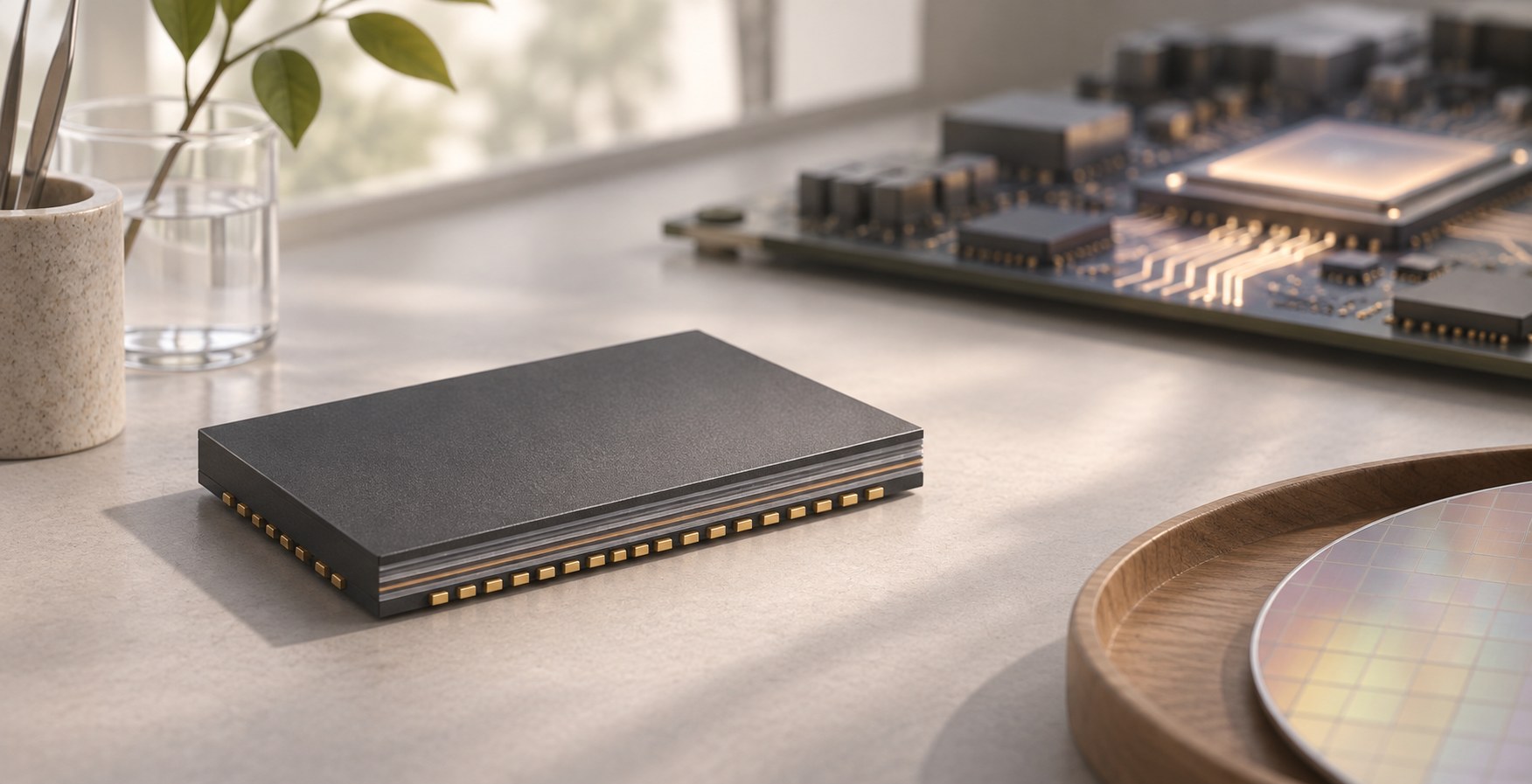
This article was reported from Samsung's November 20, 2026 leadership announcement and independent reports published the same day. Interpretations of potential business implications are identified as analysis. The feature image is an editorial illustration, not documentary evidence of a product.
- Samsung Electronics: New leadership announcement, November 20, 2026.
- Reuters: Samsung appoints new memory business head, November 20, 2026.
- Yonhap: Samsung leadership reshuffle, November 20, 2026.