
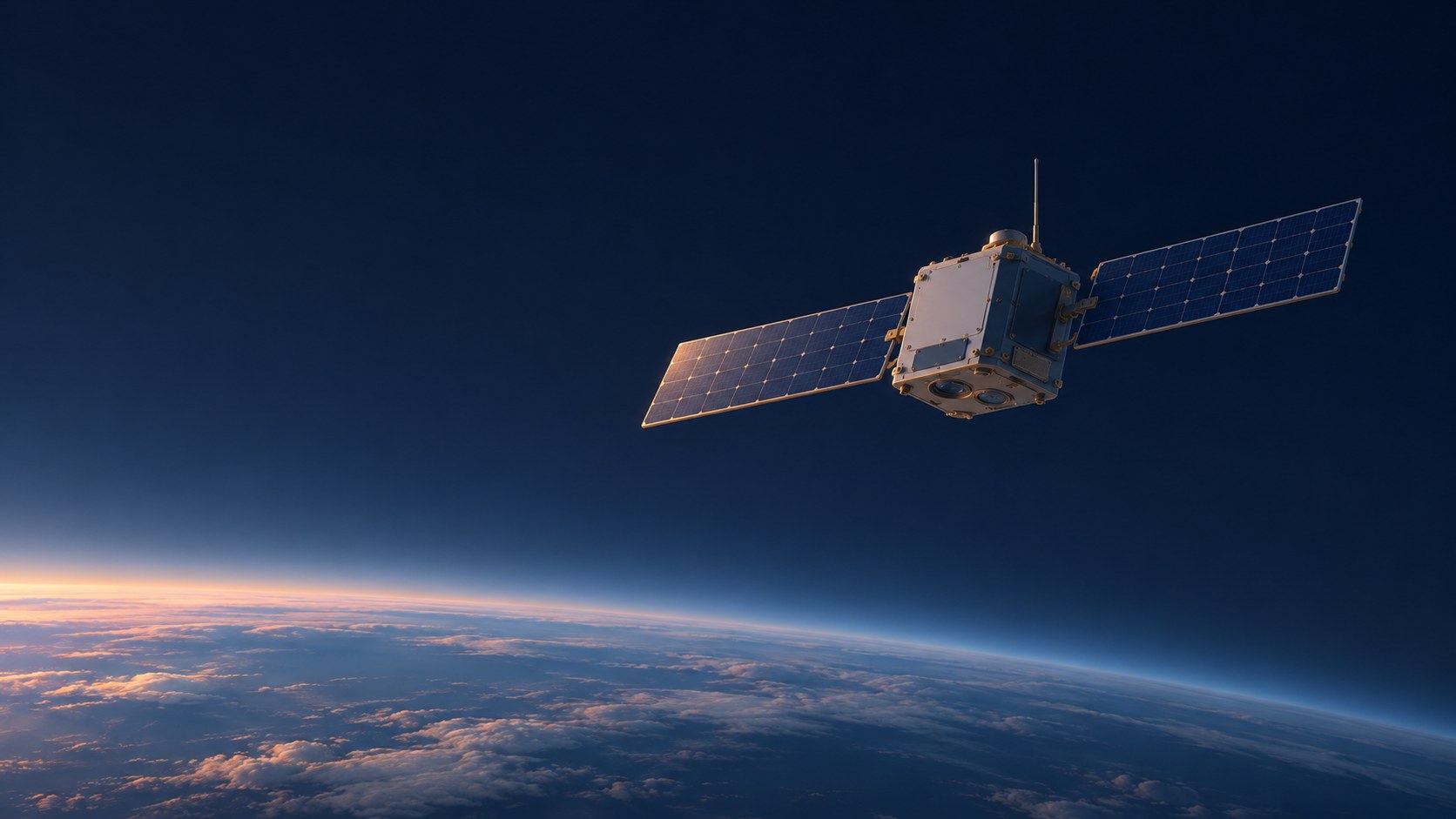
The United States has authorised SpaceX to deploy a proposed network of up to one million satellites designed to process data in orbit, opening a new chapter in the debate over where the computing power behind artificial intelligence should live.
The Federal Communications Commission announced the decision on November 25, 2026. SpaceX calls the proposed constellation Starmind. Its orbital data centres would process information in low-Earth orbit for use on Earth, while a network of communications links would connect and control the spacecraft. The authorisation is permission to build and operate the proposed system, not evidence that one million satellites are already in orbit.
The scale has drawn a sharply different response from astronomers. The American Astronomical Society warned that a constellation of this size could affect observations of the night sky and the orbital environment. SpaceX argues that access to sunlight in orbit could offer energy and cost advantages. Those claims and concerns will need to be judged against actual hardware, deployment choices and independent evidence.
What exactly did the FCC approve?
The FCC's Space Bureau addressed SpaceX's application for a low-Earth-orbit constellation consisting of one million non-geostationary satellites operating as orbital data centres. Its written order discusses the proposed system, radiofrequency use and objections submitted to the agency. A copy of the FCC announcement describes the ceiling as up to one million orbital data centres.
SpaceX sought authority for radio links that can support backup and emergency command functions, and for radio communications to supplement optical links between satellites. The agency said the approval includes specified downlink and uplink frequencies. These are details of a licensing decision, not a published demonstration that the entire proposed network can be built or operated economically.
The distinction between a maximum authorised number and a finished constellation is essential. Reuters reported that it was unclear whether SpaceX would ultimately place one million satellites in orbit. Satellite operators can seek permission for a larger number than they eventually deploy, giving themselves room to change designs or plans.
The FCC said its Space Bureau considered concerns including radio interference and orbital debris. In the order, the bureau said it dismissed certain environmental and optical-astronomy concerns as outside the commission's authority. That jurisdictional conclusion is not the same as a scientific finding that those concerns have no merit.
When would the satellites have to launch?
The project is measured in years, not weeks. Reuters reported that the licence requires SpaceX to begin deployment by November 2033, reach 10% of the maximum by November 2035 and 50% by November 2038. Ten percent of one million is 100,000; half is 500,000. The American Astronomical Society said the full constellation is due by 2040 under the authorisation.
These are regulatory milestones, not a promise that each target will be met. Timelines can be affected by engineering, financing, launch availability and regulatory developments. Readers should also distinguish a deadline in a licence from a forecast by an independent project auditor.
To appreciate the scale, Reuters reported that about 17,000 satellites existed in space at the time of its article. That comparison uses the news agency's contemporary figure and should not be mistaken for a precise future count. Even a fraction of the proposed Starmind maximum would represent a large addition to an already busy orbital environment.
What happens if the network is smaller?
The public authorisation establishes a framework and milestones; it does not by itself establish how many spacecraft SpaceX will manufacture or launch. A smaller system could have different costs, capacity and environmental effects from the full proposal. Those differences cannot be calculated reliably without detailed information about satellite design, launch cadence and operations.
For that reason, the most accurate short description is that the FCC approved a proposed constellation of up to one million satellites. Saying that a million AI data centres have already been deployed would turn a future possibility into a present fact.
Why put computing hardware in orbit?
AI workloads require processors, electricity, cooling and connections to the people or systems using their results. Conventional data centres provide these on Earth, where operators can maintain equipment and connect it to power and communications networks. Their growth has also increased attention on electricity demand, water use and the local effects of new construction.
SpaceX told the FCC that strong access to sunlight in orbit could help its proposed satellites operate efficiently and reduce some environmental pressures associated with terrestrial data centres, according to Reuters. The American Astronomical Society summarised a similar company argument about sunlight and operating costs. These are SpaceX's projections, not independently verified savings for a working Starmind network.
Solar power is attractive in principle, but the complete comparison depends on more than the energy reaching a panel. Manufacturing satellites and rockets, placing hardware in orbit, communicating with Earth, removing waste heat and replacing failed equipment all have costs and physical consequences. A credible assessment would need to compare the entire system with a clearly defined ground-based alternative.
It is also worth asking which workloads make sense. If data must travel to orbit and results must come back down, connectivity, delay, reliability and security become part of the design. The FCC's order does not establish that every type of AI task will be cheaper or faster in space. The answer could vary considerably by workload.
How might an orbital data centre work?
At a basic level, the idea is to place computing equipment and power systems on spacecraft, process information in orbit, then transmit useful results to users or systems on Earth. Connections between satellites could help move information around the network. The FCC says the authorisation includes radio links to supplement optical inter-satellite communications and to support backup and emergency command.
Keeping those links reliable is a real engineering challenge. A satellite in low-Earth orbit moves relative to the ground, so a system needs careful coordination between spacecraft, ground facilities and other users of radio spectrum. Radiofrequency allocations and interference were among the issues addressed in the FCC order.
Heat is another question. Computers consume energy and produce waste heat. On Earth, a data centre can use air or liquid cooling systems and supporting infrastructure. A spacecraft has to reject heat in the conditions of space. The precise design, size and performance of Starmind hardware will determine how SpaceX addresses that problem.
There is also maintenance. A technician cannot simply drive to an orbiting server rack with a replacement part. Operators must decide how much redundancy to build in, how to manage failures remotely and when to replace spacecraft. Those trade-offs are central to the economics, but the public approval alone does not provide an independent operating-cost comparison.
Why astronomers object
The American Astronomical Society said it had petitioned the FCC to deny the application in March and expressed disappointment after the approval. Its concerns include the combined effects of bright satellites on optical and infrared astronomy, possible radio interference and the changing appearance of the night sky.
In its November 25 statement, the society argued that the proposed satellites could be more numerous and visible for longer periods than existing systems, and that thermal emissions could interfere with sensitive infrared observations. It also raised concerns about launch and re-entry pollution and collision risks. These are the society's assessments of the proposed system, not measurements from a completed Starmind deployment.
The society acknowledged that previous changes to SpaceX's Starlink satellites had reduced some effects on astronomy without eliminating them. That history shows why design details matter. Brightness, orbit, satellite orientation and mitigation practices can change the impact, and an analysis based only on satellite count would leave important questions unanswered.
SpaceX and the FCC emphasise the potential benefits of orbital computing, while the astronomy society emphasises risks to research and access to the night sky. The disagreement is not resolved simply by quoting one side. It calls for transparent technical information and a way to evaluate impacts as the proposal moves from authorisation toward any deployment.
What the decision says about orbital debris
The FCC announcement says the system operates consistently with the agency's orbital-debris rules, and the order discusses SpaceX's debris mitigation plan. That is the regulator's conclusion within its licensing process. It does not mean that adding objects to orbit creates zero risk or that the public can already measure the eventual system's performance.
Any large constellation needs a credible plan for tracking spacecraft, avoiding collisions, handling failures and disposing of satellites at the end of their useful lives. A small failure rate applied to a very large number can still produce a substantial number of objects. The actual risk depends on the design, operating procedures, orbital conditions and the number launched.
Launch and re-entry effects deserve a similarly careful distinction. Concerns have been raised, but a robust estimate would require information about launch vehicles, frequency, spacecraft materials and disposal patterns. Readers should be wary of both sweeping assurances and precise damage estimates that do not show their assumptions.
Can Starship make the economics work?
Reuters reported that SpaceX's proposal depends heavily on lower launch costs from Starship, its reusable rocket under development. Lower cost per unit of payload could change the calculation for a constellation this large, but launch cost is only one part of the bill. Satellites, communications, operations, replacement and financing would still matter.
Reuters also reported criticism from Amazon's satellite unit and others about whether the proposed scale is achievable. Those competitors have their own commercial interests, which readers should consider alongside the substance of their objections. Conversely, a company's confidence in its own roadmap is not independent proof that its targets will be met.
At this stage, there is no public evidence in the sources reviewed here that a complete Starmind system can deliver a particular price per AI task. The most useful future comparisons would include verified launch and spacecraft costs, power delivered to processors, downtime, communications capacity and the cost of replacing hardware over its working life.
What to watch next
The first milestones are likely to be more informative than the headline maximum. Watch for specific spacecraft designs, test results, launch plans, independent assessments of brightness and radio emissions, and details of how the company plans to manage traffic and end-of-life disposal. Each would narrow the gap between an approved proposal and an operational service.
Readers should also watch for the terms of any additional approvals and for continuing dialogue with researchers and other satellite operators. The FCC said it is reviewing other orbital data-centre proposals as well, suggesting that the questions raised by Starmind may extend beyond one company.
- Authorisation: The FCC approved a proposed system of up to one million orbital data centres.
- Deployment: The licence has milestones extending into the 2030s; a full constellation is not yet in operation.
- Benefits: SpaceX argues that orbital sunlight can support efficient computing, a claim that remains to be tested across the full system.
- Risks: Astronomers raise concerns about observations, radio emissions, debris and environmental impacts.
For now, Starmind is best understood as a major regulatory approval for an unusually ambitious infrastructure proposal. Whether it becomes a practical source of AI computing, and at what cost to the orbital environment and night sky, remains an open question.
Sources and reporting context
This article is based on the FCC's November 25, 2026 decision, Reuters reporting and the American Astronomical Society's published response. Statements about future performance or impact are attributed to the organisations making them.